
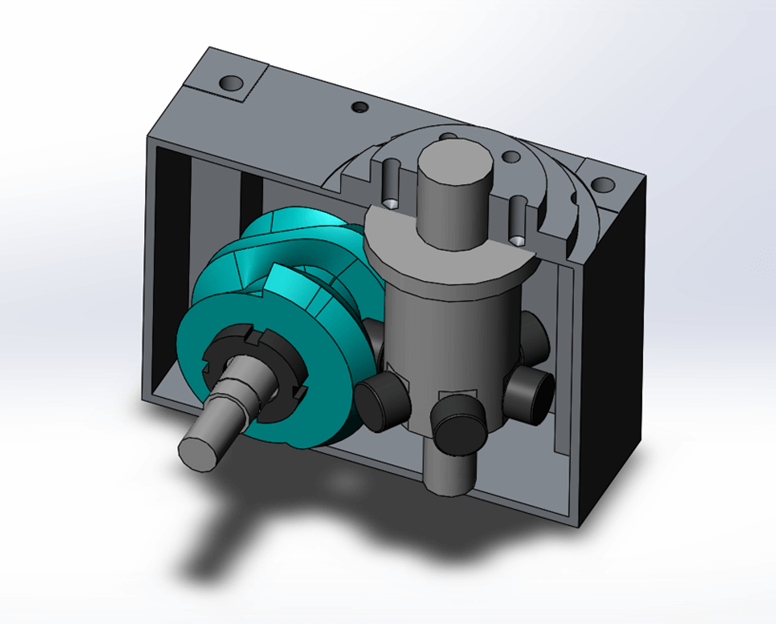
As part of the curriculum during my senior year of college, I worked on a team project provided by International Inventory Management (IIM). As a manufacturer of pharmaceutical equipment, the company tasked each team with providing a solution to a problem they had been facing with a capsule-filling machine. The machine used a globoidal gearbox to drive the system's indexing motion; however, the gearbox was failing to position the assembly accurately after a year of operation. The teams were asked to redesign the overall system in order to increase the time before failure to two years.
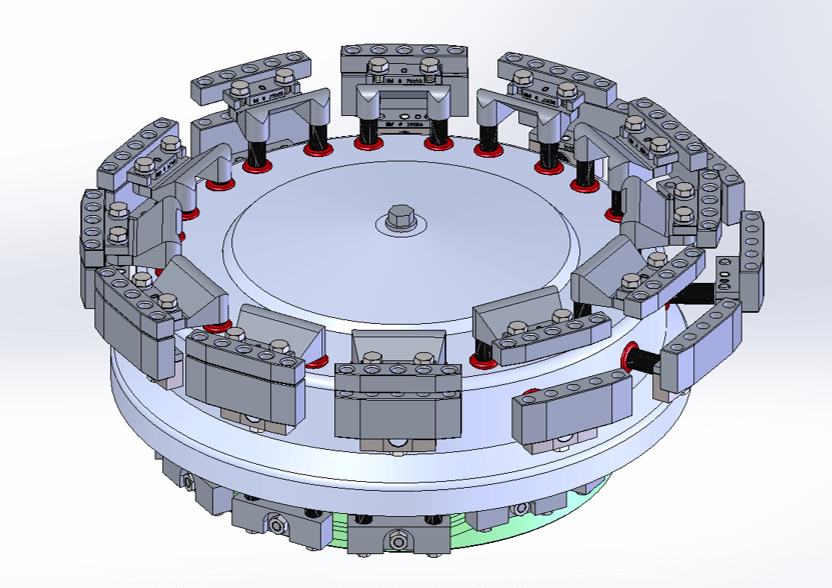
After studying the machine, my team realized that large forces within the gearbox generated during operation were causing wear on its internal components and leading to failure. To address this, my team's solution involved two objectives, which included:
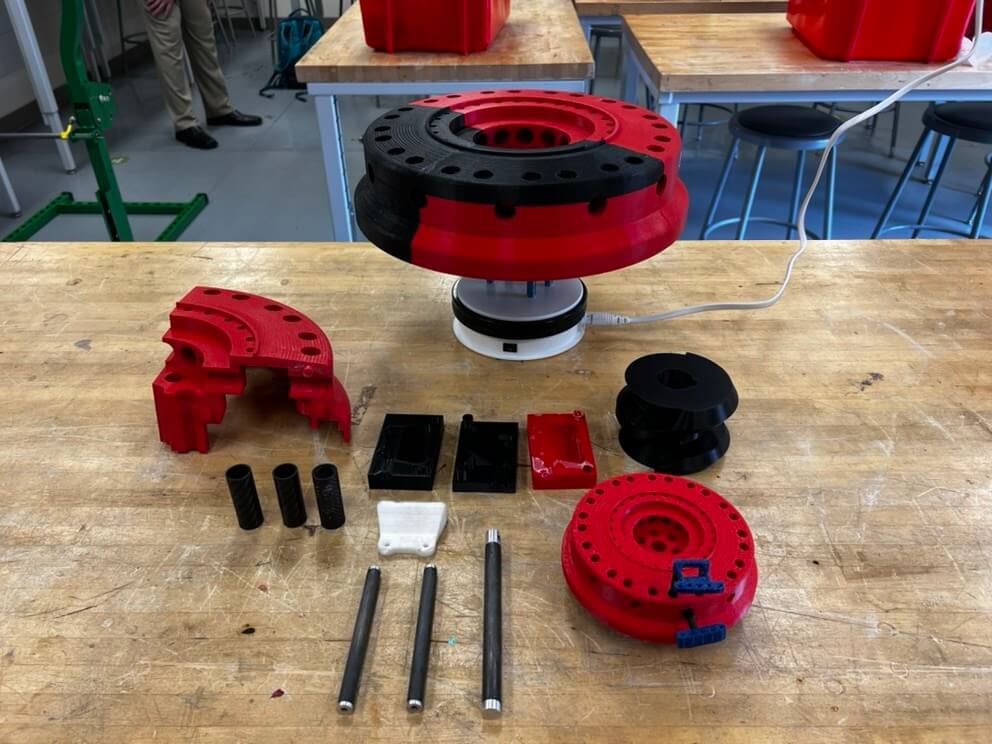
The team accomplished the first objective by either lowering the amount of material used in the design of several components or by selecting a different material to be used for a component. For example, a significant amount of material was removed from the large segment turret that housed most of the parts in the rotating system. Also, the upper and lower segment carrier rods were modified to be composed of hollow carbon fiber tubes with aluminum bungs at each end.
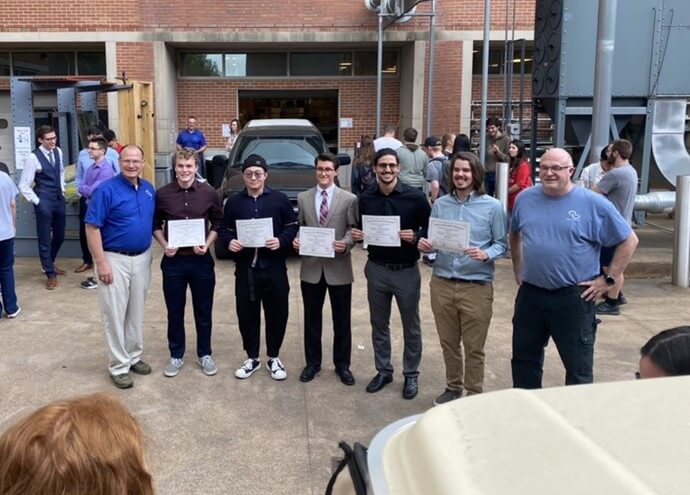
After presenting this solution to IIM and demonstrating its performance, my team was selected as having the best solution to the problem. Ultimately, out of six teams, my team won first place in the design competition.
Over the course of this project, I was able to:
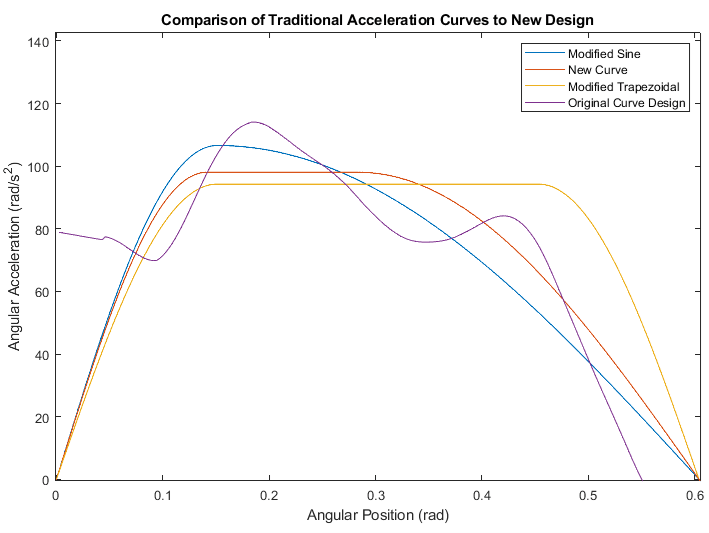
The second objective was reached by redesigning the acceleration curve associated with the globoidal cam to have a lower peak angular acceleration than that of a modified sine curve, a curve commonly used in industry for high-torque applications. Overall, the team was able to achieve the following:
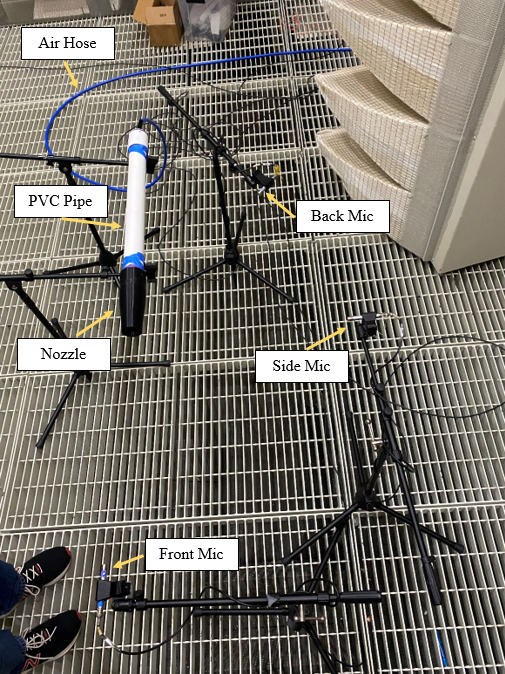
Throughout the semester, my team focused on investigating the effectiveness of passive methods of jet noise reduction that have been more recently proposed in the relevant literature. We found that a promising and well-studied passive solution has been the implementation of chevrons around the circumference of the exit nozzle of an aircraft engine to break up large turbulent air structures. The work of the team from the previous year mainly focused on characterizing how altering the chevron geometry impacted noise reduction. My team's objective was to expand upon this previous work by exploring the noise reduction capabilities of three variations of a lobed engine nozzle design as well as that of an acoustic metamaterial.
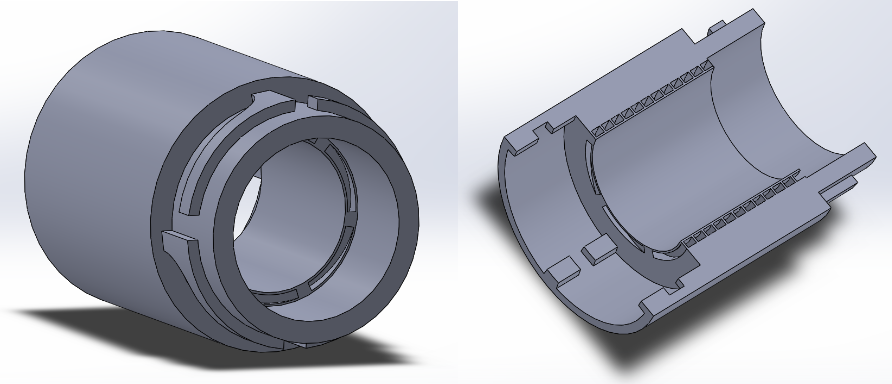
We conducted a series of tests in an anechoic room to gather sound pressure data that could be analyzed to understand the effect of the lobed nozzles and acoustic metamaterial on jet noise. Our experimental setup was based upon that of the previous team, which involved sending high velocity air from an air compressor located outside of the anechoic room through a PVC pipe with a nozzle at the end to simulate the conditions of exhaust air exiting an aircraft engine. An improvement was made to the previous setup by adding a 3D-printed coupling to the end of the pipe that would allow for the easy attachment and removal of various nozzle configurations. Sound pressure data was recorded from microphones placed at three different angles around the exit nozzle within the anechoic room, and the data was collected using a software program called DAQExpress. During testing, air was released from the air compressor and sent into the anechoic room and through the PVC pipe via a hose. The microphones were then used to record 30 second long segments of the noise generated from the exit of the pipe.
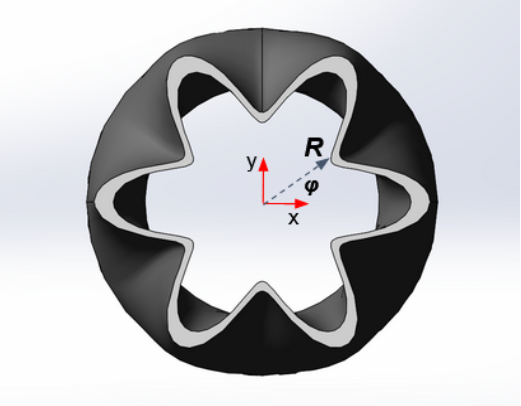
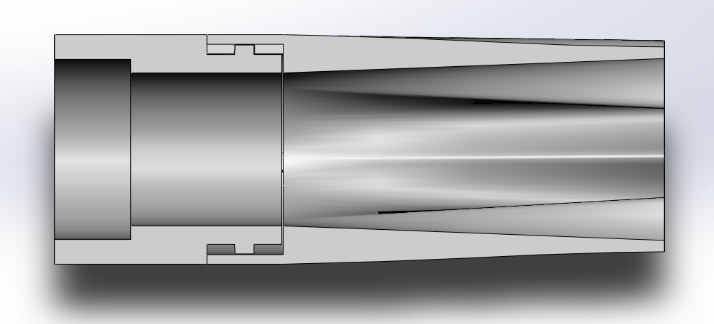
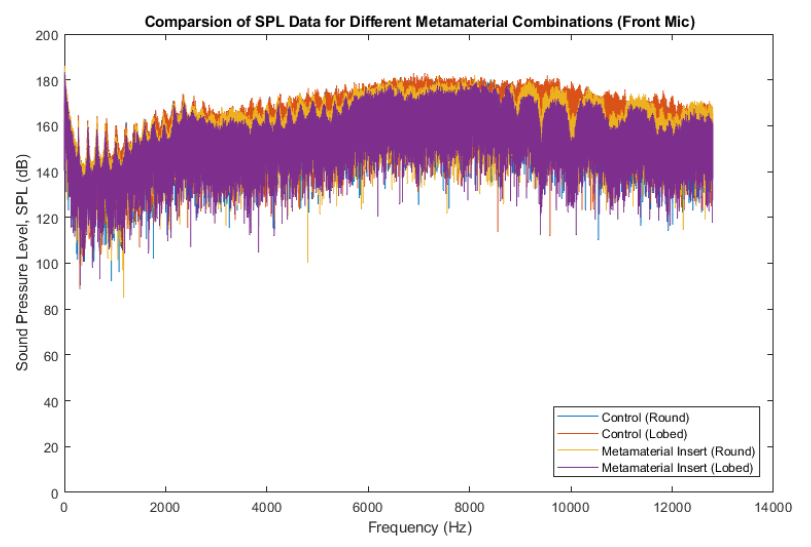
Secondly, the feasibility of implementing a 3D-printed acoustic metamaterial proposed in the literature was explored and its capacity for reducing jet noise was tested. A nozzle attachment featuring a metamaterial design was printed to be used between the end of the PVC pipe and the nozzles. A helical design was employed that would achieve noise reduction by creating destructive interference between the air passing through the helical passages and that passing through the center of the pipe. Testing the metamaterial along with both the control nozzle and one of the lobed nozzles yielded interesting results. The introduction of the metamaterial caused a significant reduction in the noise measured by the microphones, but there was also a noticeable drop in noise level from the configuration that included both the metamaterial and the control nozzle to the configuration with the metamaterial and the lobed nozzle. Since there was little to no difference in noise level observed while testing the lobed nozzles in the absence of the metamaterial, the team concluded that the introduction of the metamaterial had altered the air flow such that the effect of the lobes could be observed. It was believed that the change in diameter from the hose to the PVC pipe was too drastic and was causing high velocity air to pass mostly in the center of the pipe and not also along the outer radius. The presence of the metamaterial seemed to have caused mixing that allowed there to be higher velocity air closer to the outer radius of the pipe, allowing the air to be influenced by the lobes at the end of the nozzle. Although we were prevented from conducting further testing due to time constraints, any future work would need to involve improving the connection between the hose and the PVC pipe to either alter the current setup or to replace the connection such that there would not be such a dramatic change in diameter. The team also suggested that another method of passing high-velocity air through the pipe should be investigated. Using the air compressor seemed to introduce some unwanted variation because it was not able to hold a constant, measurable, and repeatable air velocity profile. Using the university's wind tunnels was suggested as a possible solution.
Overall, this was a valuable opportunity that allowed me to gain experience in a team leadership role in addition to further developing my knowledge of research and experimentation. I learned how to communicate effectively with my teammates, how to leverage each member's strengths in order for the team to be more efficient, and how to make the best use of our meetings together. I also was able to obtain a greater understanding of how to design and improve an experimental setup as well as grow a deeper familiarity with data acquisition equipment.
During the 2022 spring semester, I took a course in mechatronics as a technical elective. The majority of the course structure centered around a semester-long group research project. My team selected the project which involved investigating methods of reducing the jet noise emanating from aircraft engines. This was a relevant and interesting topic because jet noise poses a great challenge to the aviation industry and is an issue that has received much attention in recent decades. This is largely due to public concern over the variety of health-related issues and the negative environmental impacts caused by jet noise in both commercial and military applications. My team's task was to build upon the work of a team from the previous year and to explore the topic of jet noise reduction further. My role on the team involved:
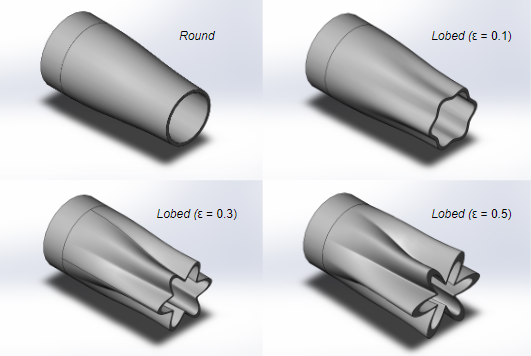
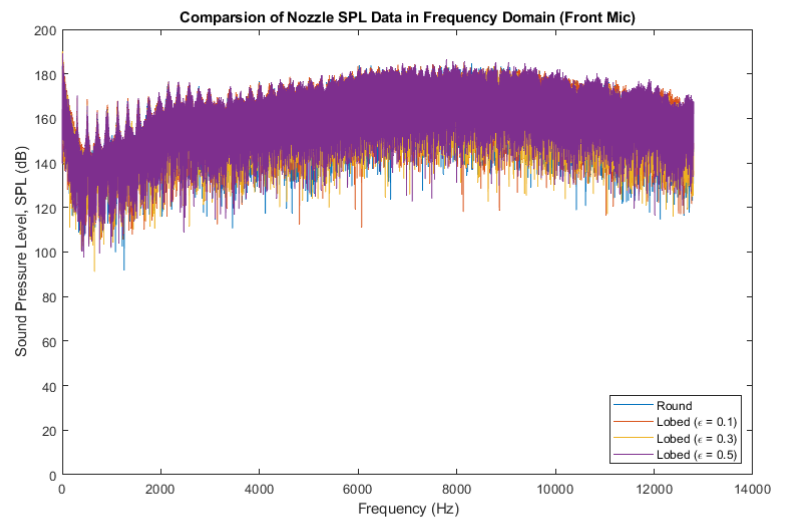
We first began testing the three different lobed nozzle designs to compare their performance relative to each other. Like chevrons, lobes located around the circumference of an aircraft's exit nozzle act as a passive method of influencing the turbulent structures in the exhaust flow. However, in contrast to chevrons, little is understood about the effects of varying the characteristics of the lobed nozzle geometry on jet noise. The team decided to explore how varying the penetration ratio of the lobes, which is a quantity describing the level to which the lobes impinge upon the exhaust flow, would impact the noise generated from the air leaving the nozzle. We 3D-printed nozzles with three different lobe penetration ratios along with a simple round nozzle that would act as a control. After collecting data for each individual nozzle, the sound pressure level (SPL) observed across the frequency domain was calculated using MATLAB. The results of this analysis showed very little difference in the noise level measured for each nozzle tested. This was an unexpected outcome, but we continued and began doing trials involving the addition of the metamaterial to see if this would provide some insight.
Over the summer of 2021, I applied and was selected to receive a grant to participate in the Research Experiences for Undergraduates program (REU) at NC State. Under the guidance of a faculty member, I had the opportunity to pursue an individual research topic that aligned with my interests. My research involved studying nonlinear stochastic energy harvesters, which are electromechanical systems that transform ambient vibration into electrical energy. I focused on investigating the behavior of an energy harvesting system having two equilibrium positions, also called a bistable system, proposed in the literature that had been studied experimentally, but not numerically. The specific system I analyzed was composed of two coupled oscillators with magnets at their ends. Because of the interplay between these two oscillators, the system was called a synergetic bistable system.
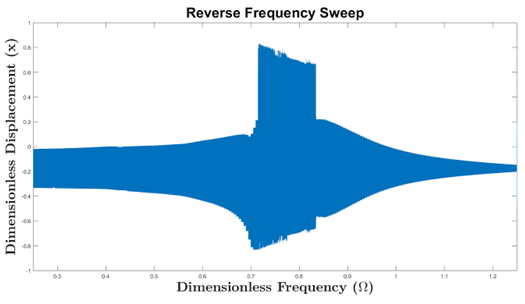
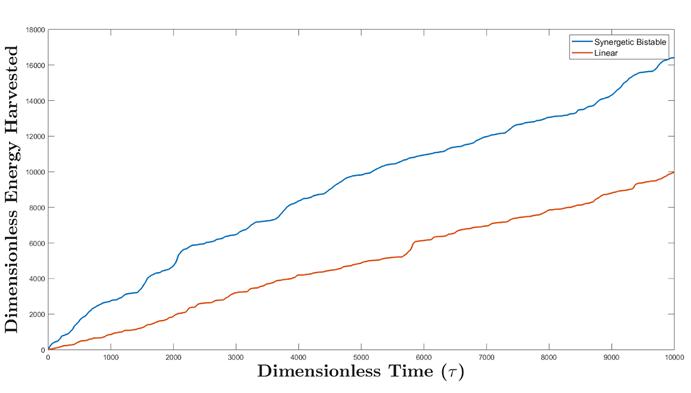
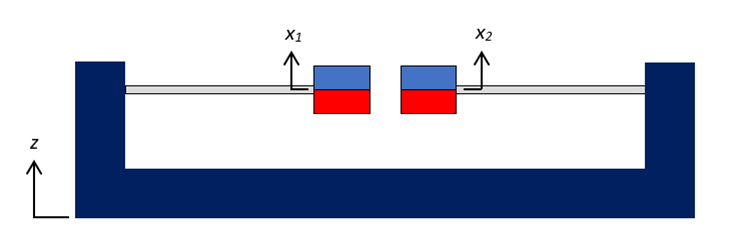
My research progressed as follows:
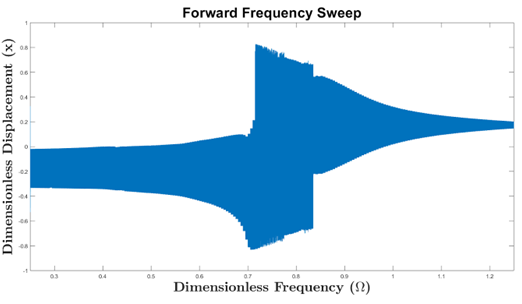
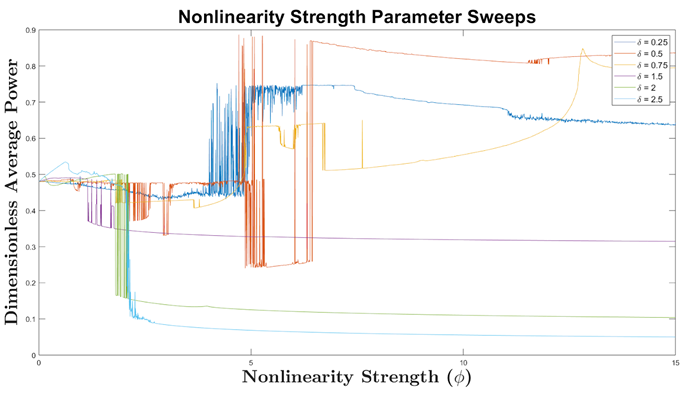
To understand the behavior of the synergetic energy harvesting system, I carried out three categories of simulations: frequency sweeps, parameter sweeps, and a noise study. From these numerical simulations, three main observations were made and are described below.
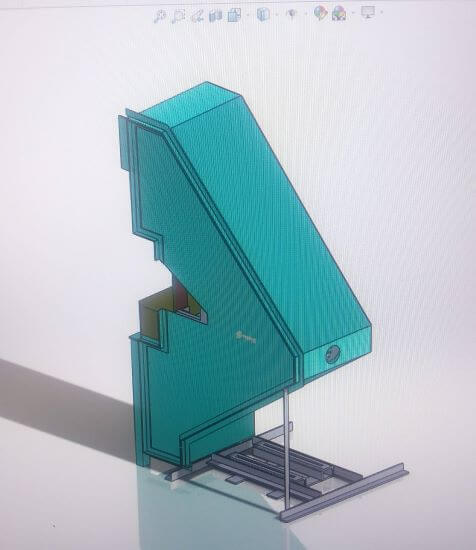
During the internship, I modeled and documented numerous parts and assemblies for the company to update their internal records. One of these assignments involved modeling and redesigning a grinding machine used on the manufacturing floor. The company intended to use a new belt on the grinder, so the design of the machine had to be adjusted to accommodate a belt of a longer length. I took all of the necessary measurements and created a SolidWorks assembly of the entire grinder. Then, I altered the the construction of the grinder so that it would have a greater height so a longer belt could be used. Ultimately, the company used my new design when the grinder was rebuilt.
In the summer of 2019, I interned at Council Tool, a tool manufacturing company in Lake Waccamaw, North Carolina, as part of the Golden Leaf Leadership Program. I worked alongside engineers in the die shop to:
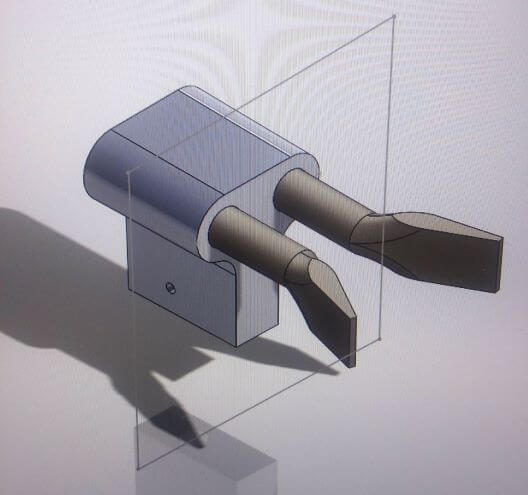
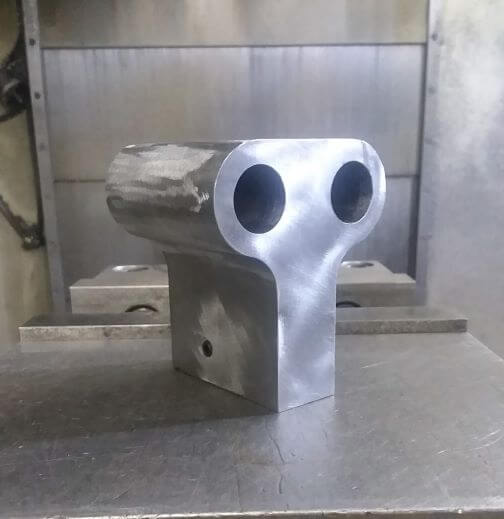
Another project I had was to design and fabricate my own fixture that would be used to hold new tools in place so that they could undergo the heat treatment process. After taking measurements of the machine used for heat treatment, I created the fixture design in SolidWorks. Then, using Mastercam, I created the program that would be used by a CNC mill to machine my fixture from metal stock. I operated the CNC to begin the program and monitored it as it progressed. Once the program was complete, I tested the newly fabricated fixture to ensure it was functional.
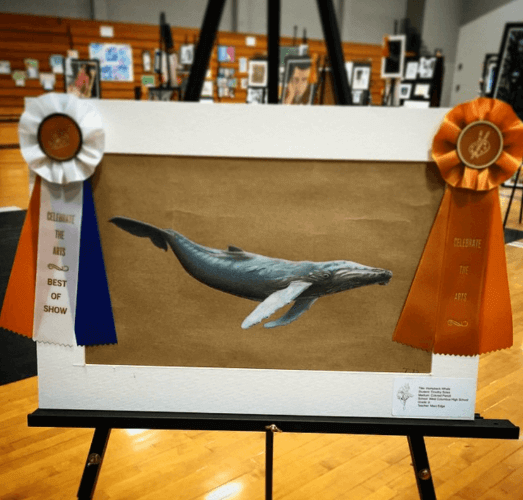
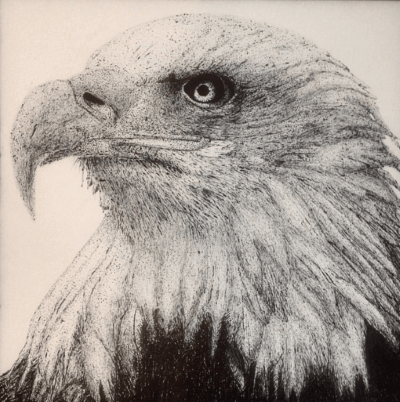
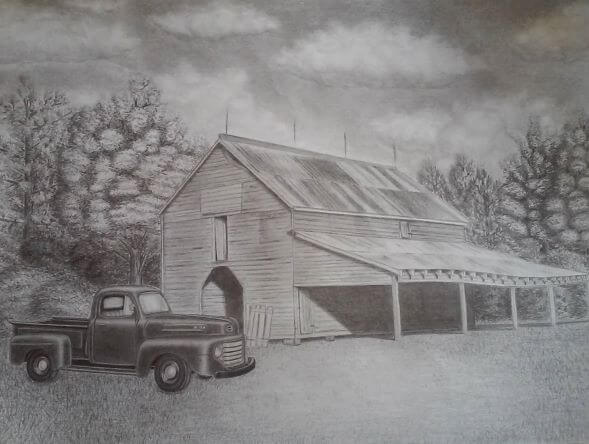
Below is a collage of several visual art projects I've completed with various mediums.